JePréviens: I built a community-safety app. Then I went live on prime-time national TV.
JePréviens is the story of a product built end to end: the code, the AI, the field work, the institutions. And above all, the mistakes that turned me from a developer into an entrepreneur.
- 30k+
- users today
- 10k
- sign-ups in one minute (TV segment)
- TF1 + M6
- prime-time national TV
- Solo
- designed, coded, launched and run A to Z
JePréviens (French for “I warn”) is a community-alert app I designed, built, shipped and grew on my own, from the first idea to more than 30,000 users. Along the way: a prime-time national TV segment that brought in 10,000 users in a single minute, towns adopting it, one town hall funding a feature I then gave to everyone, AI running in production for moderation and photo blurring, and a long list of lessons (technical, legal, human) I hadn’t seen coming.
This isn’t a story about perfect code. It’s the story of a real product, with its wins and its failures, that taught me to build and to push a product into the world. That combination is exactly what I bring to the companies I work with today.
01. The origin: a shared problem between two villages
Summer 2023. On social media, I get talking with a salesperson based on the other side of the country, about 700 km away. We’re in two different small rural towns, but we share the same observation.
At the time, I’m an elected member of my town council. From the inside, I see a concrete problem: existing neighborhood-watch apps are too expensive for small rural towns. The villages that need them most can’t afford them.
But I’m a developer. Where others just note the problem, I can solve it. I decide to build the missing tool, first to protect my own town.
What I take from it: The best products don’t come from abstract market research, but from a problem you live personally. I wasn’t looking for a business idea. I was solving a pain I knew from the inside.
02. Building: from idea to working app in weeks
September to October 2023, I build JePréviens.
- FlutterFlow for the app: a no-code tool, but one that doesn’t lock you out of the underlying code. A deliberate choice: move fast without trapping myself.
- n8n for automation and AI, which is the core of my craft. Photo blurring, content moderation, background processing.
The product idea is simple and clear: let citizens warn each other, horizontally. That’s a distinction I stand behind. JePréviens is citizen-to-citizen, whereas a government app works vertically, from citizen to institution. Two complementary logics, not competitors.
The mayor backs me. My salesperson friend starts contacting the local press.
03. Going viral: 10,000 users in one minute
First the local press. Then local radio. Word of mouth kicks in.
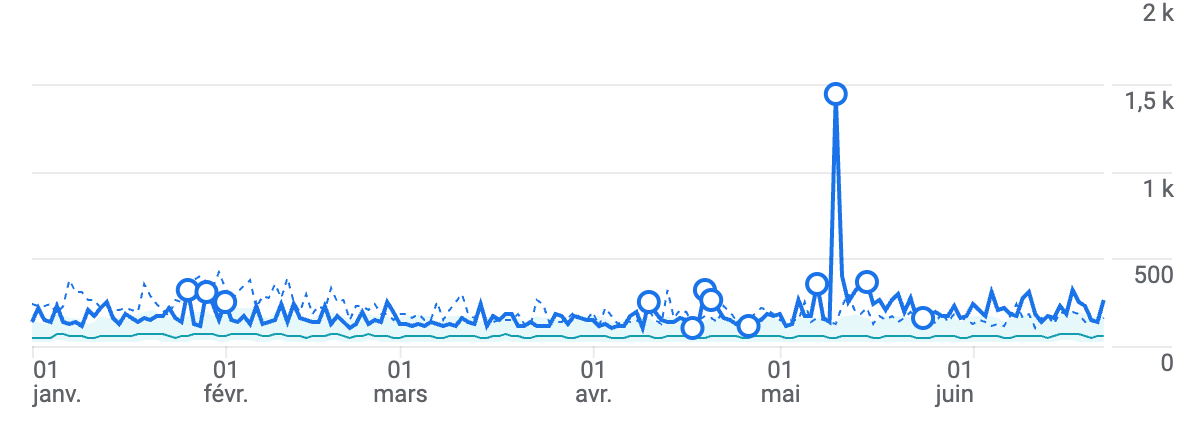
And in May 2024, the acceleration I never saw coming: France’s two biggest national TV channels reach out. I appear on the prime-time evening news, the most-watched slot in the country.

The result is dizzying. Before the segment, I had about 1,500 users. During the broadcast, I gain 10,000 in one minute. Today JePréviens has more than 30,000 users, still growing.
I get a wave of thank-yous. Plus improvement requests, feedback, and even offers to buy the app outright.
My first big mistake: I hadn’t planned for the surge. The app uses Google Maps, and the free monthly quota blew up in minutes. That TV appearance cost me €400 in overages. I immediately reworked the code to control those calls. First lesson in operating at scale: an unprepared success costs money.
04. Institutions: the slowness of the public sector
After the media peak, I turn toward town halls and county-level bodies, the idea being that they’d promote the app to their residents for me.
I build a dedicated dashboard for town halls and law enforcement, with extended rights and specific features. We hire a young salesperson who contacts towns and runs presentations, with or without me. I also present to local public-safety officials, who show interest.
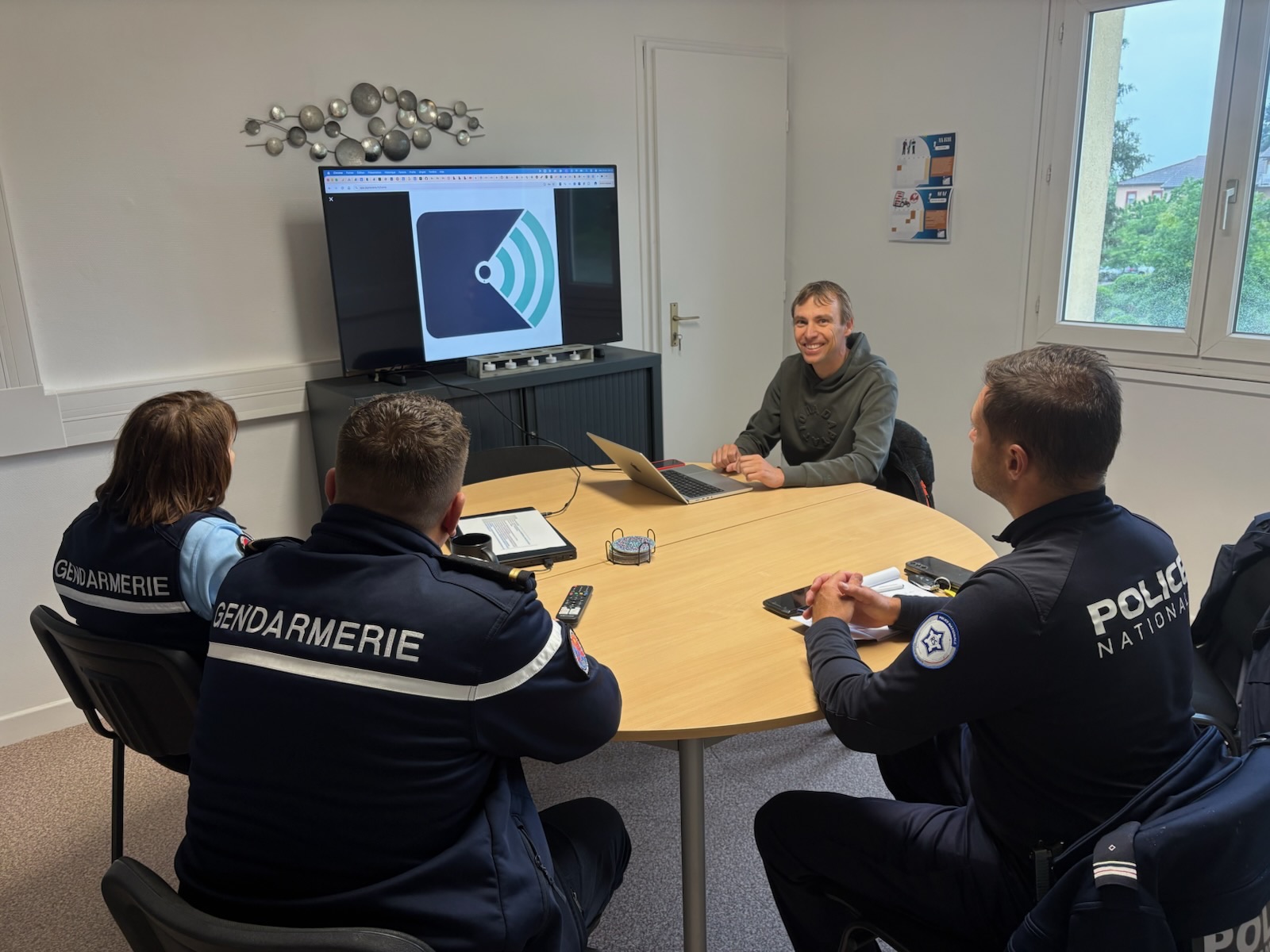
Everyone is enthusiastic. But nothing gets signed quickly.
The institutional lesson: The public sector is not the private sector. Every decision goes through a council vote, annual budgets, slow validation cycles. A mayor’s enthusiasm doesn’t make a signature. Selling to government takes a patience and a sales cycle radically different from the private world.
05. The trough: when the money doesn’t come
Here’s the part people rarely talk about.
The app is free, and will stay free for citizens, on principle. But early on, we earn nothing. And that weighs on the team.
My salesperson friend, seeing no money coming in, gradually steps back. The young salesperson doesn’t continue either: it’s not as fast as hoped. Pricing tests with town halls keep hitting the same slow council cycles.
I end up alone. I keep JePréviens going as a side project, out of conviction. I eventually set a clear price: €199 per year for towns above 2,000 residents, the app staying free for citizens. Today many towns use JePréviens, and one of them even funded the development of a feature I then gave to all the others.
The human lesson: A project that generates no immediate revenue tests how solid your partnerships really are. The people who were there for the quick win leave. Staying takes a conviction that goes beyond money. It’s also what forced me to learn every skill myself.
06. Scale: what nobody sees
Running a flow of 30,000 users has nothing to do with my earlier projects. This is where I grew the most technically.
Infrastructure. Firebase backups, Cloud Functions, load handling, separate staging and production environments so I never break the live service while testing. Invisible to the user, but it’s what keeps an app standing.
AI in production, the core of my craft. I don’t do AI for show, but to solve real operational problems:
- Automatic photo blurring via an external API orchestrated by my n8n workflow, to protect privacy.
- Automatic moderation of hate speech, spam advertising and inappropriate content, by AI.
But AI isn’t a tool you install and forget. It’s permanent work: tuning the bots, tracking model changes, watching costs shift. And above all, keeping control. I built validation steps and alerts that notify me, so a human stays in charge of the AI’s decisions. Automation is essential, but it has to be steered.
Institutional statistics. Many automations produce statistics for mayors and law enforcement: raw data turned into useful information for the people protecting the area.
The architect’s lesson: Building a feature is 20% of the work. Running it reliably, securely and cheaply at the scale of 30,000 users is the other 80%. That’s where experience actually counts.
07. The walls: what I didn’t see coming
GDPR. I hadn’t anticipated it, and it’s a heavy topic: data anonymization, the right to erasure, the obligation to state exactly what data I collect and why, hosting in Europe, with all the complexity that implies, especially for Cloud Functions. Compliance isn’t optional for an app handling location and safety data.
Apple’s validation. To publish on the App Store, Apple required me to prove I was in contact with law enforcement or government, and that they approved. I had to obtain an official document stating that JePréviens was wanted in my town. That document opened France for me. More recently, a town on the Luxembourg border gave me an equivalent document that let me open Luxembourg. On Google’s side, none of these constraints existed. Every store has its own rules, and you learn them one at a time.
Emailing 30,000 users. A challenge in itself. I learned the difference between transactional and marketing emails. And above all the bounce-back trap: I assumed all my users had valid addresses. They didn’t. Temporary Apple relay addresses, full inboxes, deleted accounts. Too many invalid addresses, and you land in spam. I use Amazon SES (by far the cheapest, but technical) and Brevo (simple and visual, but pricier). Each tool has its place.
The cross-cutting lesson: A product that works surfaces problems no tutorial mentions. Legal, deliverability, store rules. You only learn these by operating a real product at scale, and that’s what makes you able to anticipate them for the next one.
08. The shift: from developer to full partner
At some point I made an honest assessment: I was bad at marketing, video and SEO. A great product nobody sees is worthless.
So in early 2025, I trained myself. I improved the site’s SEO, produced explainer videos, learned to make the project visible. Back then, AI coding agents didn’t exist yet: everything was done by hand.
In late 2025, AI coding tools entered my workflow. I use them to evolve JePréviens. They reviewed my entire codebase and helped me make many security improvements. But, and this is an important lesson about AI, they sometimes introduce bugs or overly strict protections that need monitoring and regular testing. AI speeds things up enormously, but it doesn’t replace judgment and control. I keep FlutterFlow and Code Magic for store deployment, because it’s simply more efficient for that step.
The transformation: JePréviens turned me from a developer into an entrepreneur. I had to learn product, infrastructure, AI in production, legal, marketing, selling to institutions, and the relationship with thousands of users. None of these skills were on my starting résumé. All of them are now.
What this project says about how I work
JePréviens isn’t just an app. It’s proof that I can carry a product end to end.
- Build. The app, the infrastructure, AI in production, automations that hold up at scale.
- Push. Visibility, media, SEO, video, presentations to institutions.
- Operate. GDPR compliance, security, costs, deliverability, day-to-day reliability.
- Decide. What to monetize, what to keep free, where to put the human in the AI loop.
AI changes every day. Integrating it intelligently into an organization is no longer optional, but doing it alone without missteps is a craft of its own. That’s where I come in: not as a consultant showing slides, but as a partner who has already built, launched and operated a real product.